Trade performance is recorded in the contract. Everything before it is recorded nowhere.
- Conference
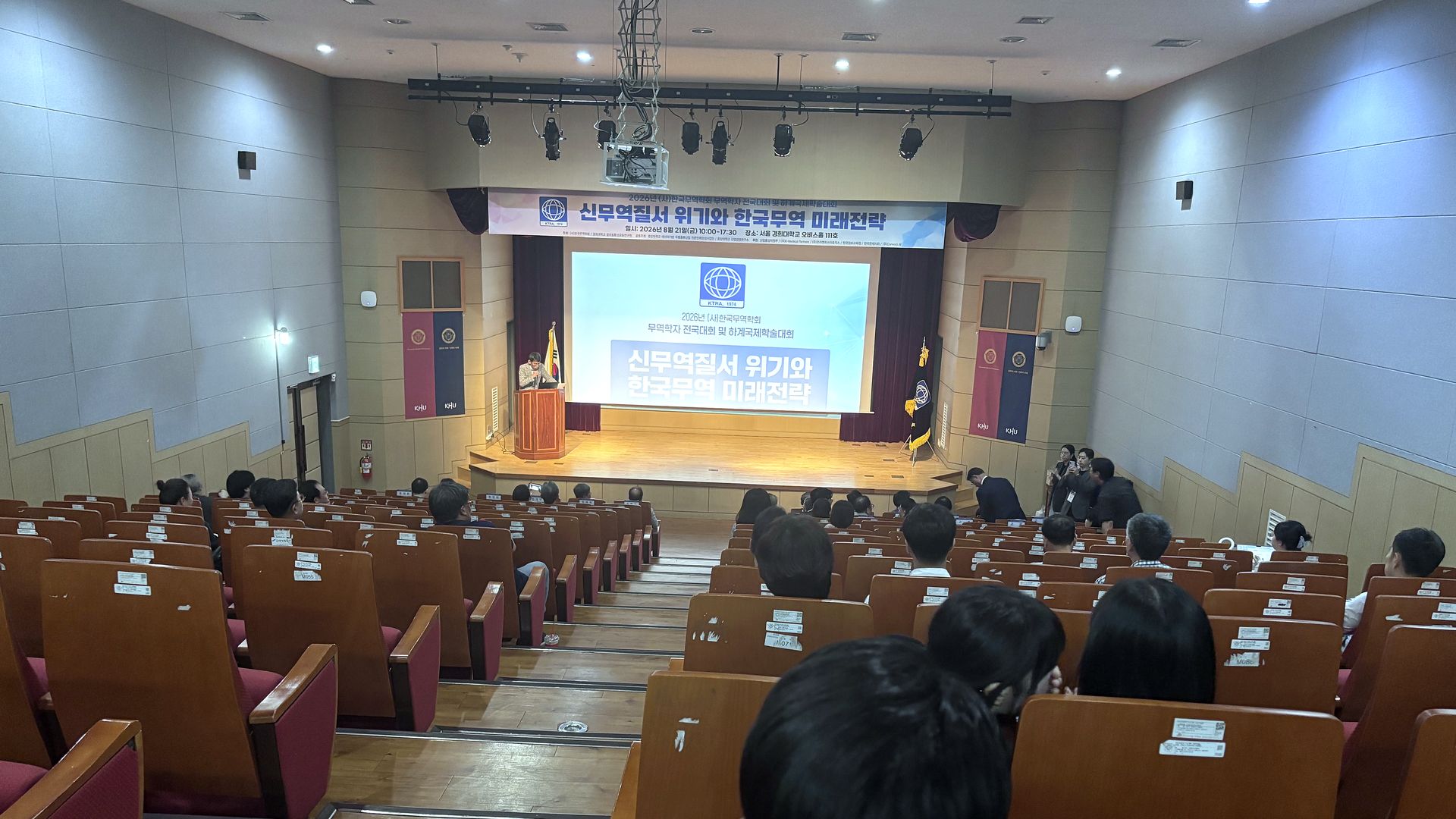
- 「2026년 (사)한국무역학회 무역학자 전국대회 및 하계국제학술대회」 — theme: “Crisis in the new trade order and Korea’s future trade strategy”
- Date
- Friday, August 21, 2026, 10:00–17:30
- Venue
- Ohbis Hall, Kyung Hee University Seoul Campus
- Host
- Korea Trade Research Association · Kyung Hee University Institute of Global Trade and Finance
- Co-host
- Chung-Ang University Data-Based Distribution & Logistics Workforce Program · Chung-Ang University Institute of Industrial Management
- Sponsors
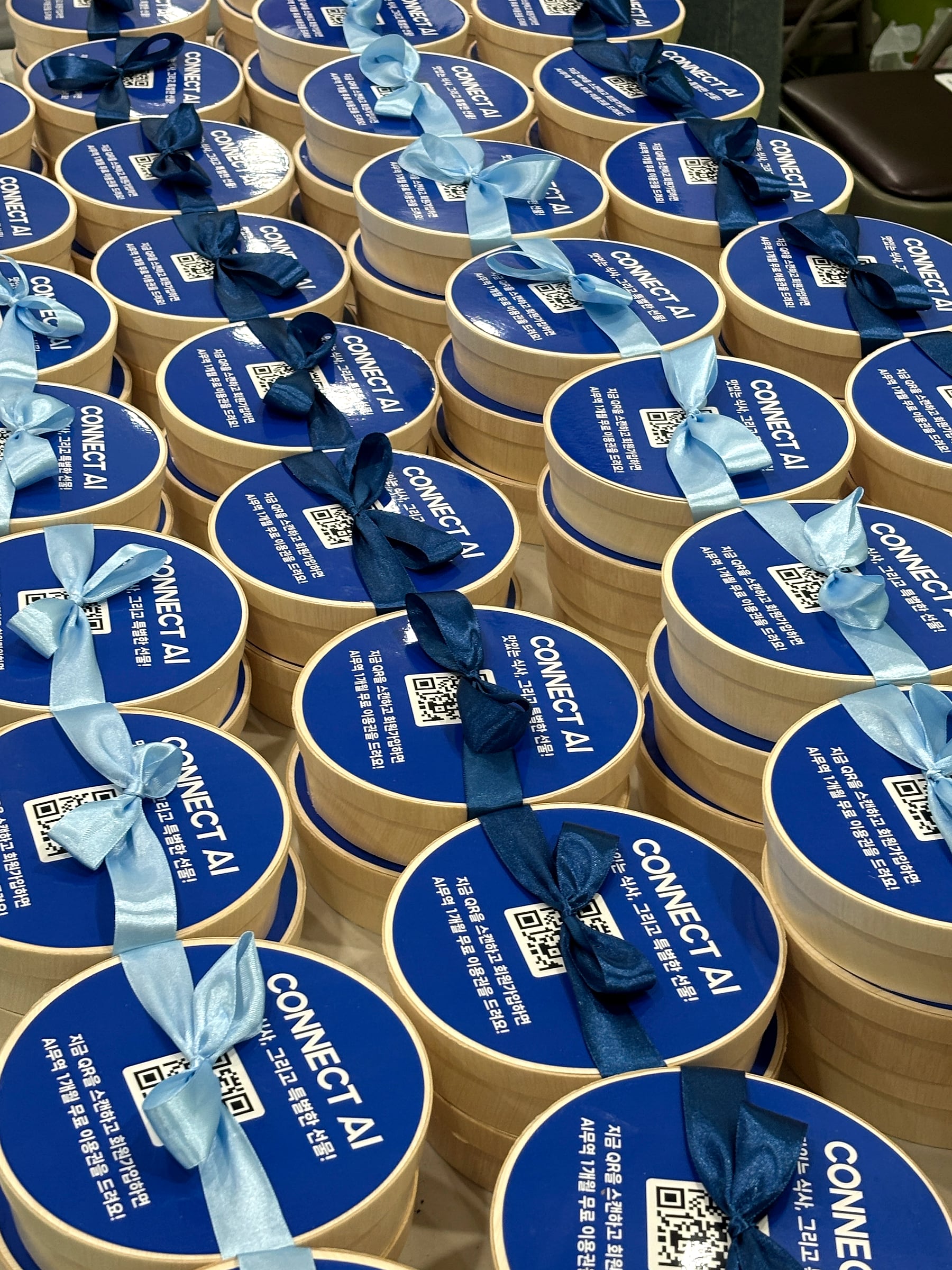
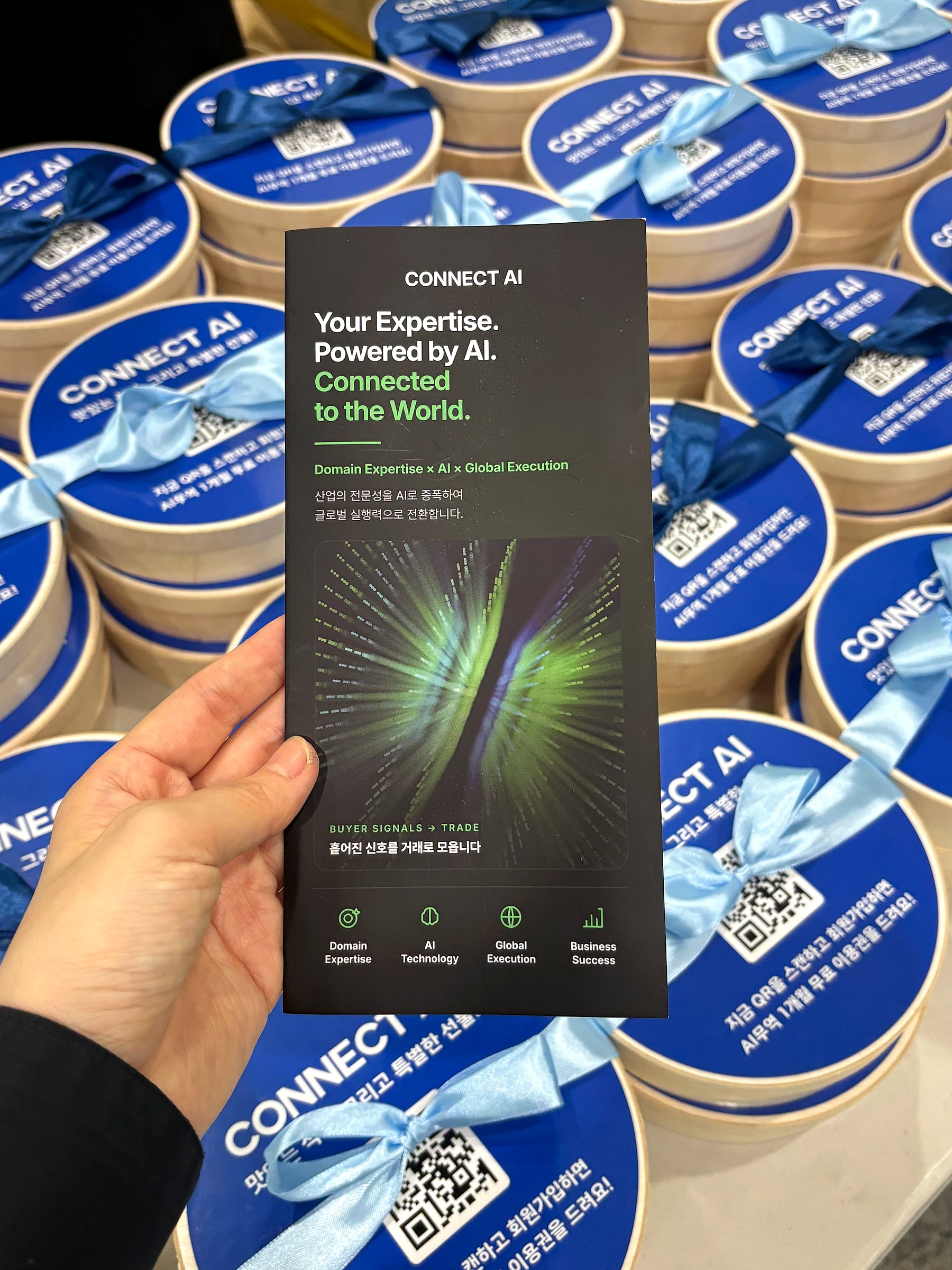
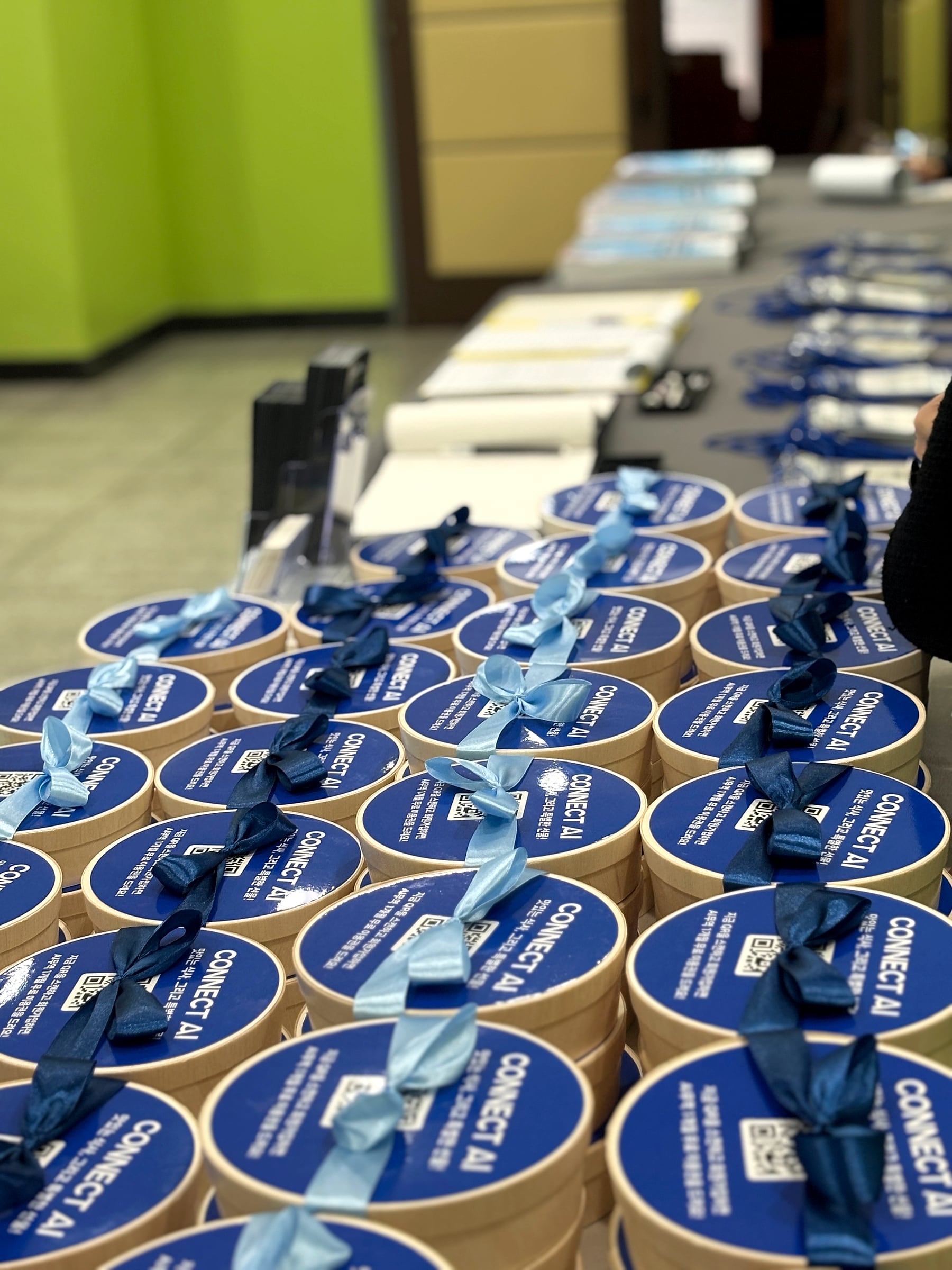
- Ministry of Trade, Industry and Energy · K-Medical Partners · Korea Information Education Institute · Orient Star Logics · Korea Customs Brokers Association · CONNECT AI — sponsors of the conference, CONNECT AI among them
- Our slot
- Session II (Room 251) · 15:00–15:30
The video made for this talk
What it means to read digital behavior, in 1 minute 44 seconds.
The ruler we measure with is still at Trade 1.0
The way trade works has moved from personal networks to online, and then to data. The ruler we measure it with has not. Consultation counts, contract values, participant satisfaction — all three are taken after the fact, and all three rest on memory and self-report.
The talk argued that this leaves three structural limits. Contracts close months to a year after first contact, so they fall outside a single semester or single-year programme cycle. Satisfaction surveys measure perception, not behavior. And the stretch between sending and signing — whether it was opened, where the reader lingered, whether they came back — is recorded nowhere.
Six steps that turn one business card into data and a next action
The practicum model the talk laid out. Each step leaves a log, and that log becomes the basis for the next step.
Read the business card and record what was discussed.
Check domain trust, international sanctions lists and corporate identity.
Verify the company, the product and the contact’s role.
Write the message and materials from that research.
Read opens, effective sessions and revisits.
Set priorities and run the next action.
Session II programme
| Time | Topic | Presenters |
|---|---|---|
| 14:00–14:30 | Effects of national R&D factors on technology exports by country and technology | Kim Dong-hyun (KISTEP) Jang Yeon-hee (K-Medical Partners) |
| 14:30–15:00 | A study of 『商業學』, a trade textbook from Korea’s enlightenment period | Kim Sung-kook (Mokpo National Maritime Univ.) Lee Yang-ki (Pusan National Univ.) |
| 15:00–15:30 | A model for applying digital trade intelligence to AI trade-talent development — the Connect AI case | Cho Won-gil (Namseoul Univ.) Songyi Yang (CONNECT AI) |
| 15:45–16:15 | Export-growth effects of Korean Aid for Trade on recipient countries — a panel quantile regression | Park Ki-tae (Sungkyunkwan Univ.) |
| 16:15–16:45 | From Prediction to Adaptive Orchestration: An Agentic AI-Digital Twin Framework for Resilient and Sustainable Smart Logistics Centers | Jung Jae-yeop (Namseoul Univ.) |
The public link is the association’s conference notice. The Session II programme was a printed handout with no online edition.
What two campaigns showed
The study took two campaigns run inside a university trade practicum as its units of analysis. One was a discovery campaign into Southeast Asia (July 2026, 120 sends); the other followed up buyers met at a North American food show (August 2026, 115 sends).
Because the two campaigns are different in kind, this is not a comparison that ranks one above the other. It is an observation of what becomes visible when the same ruler is applied to the process. Interest-stage reach was observed at 8.3% (10/120) and 45.2% (52/115); high-engagement reach at 0.8% (1/120) and 9.6% (11/115).
In the follow-up campaign, 52 of the 115 recipients reached the interested tier or above (41 interested, 11 highly engaged), and the system recommended immediate follow-up with the buyer showing the strongest signal. A reply and a sample-shipment request followed, though buyer and company names and counts were withheld. The figures say one thing — volume alone cannot explain the difference in process.
Perception has to be asked for and can be distorted; behavior is already being recorded.— from the deck, “Shifting the layer of measurement — from perception to behavior”
What remains, and what does not
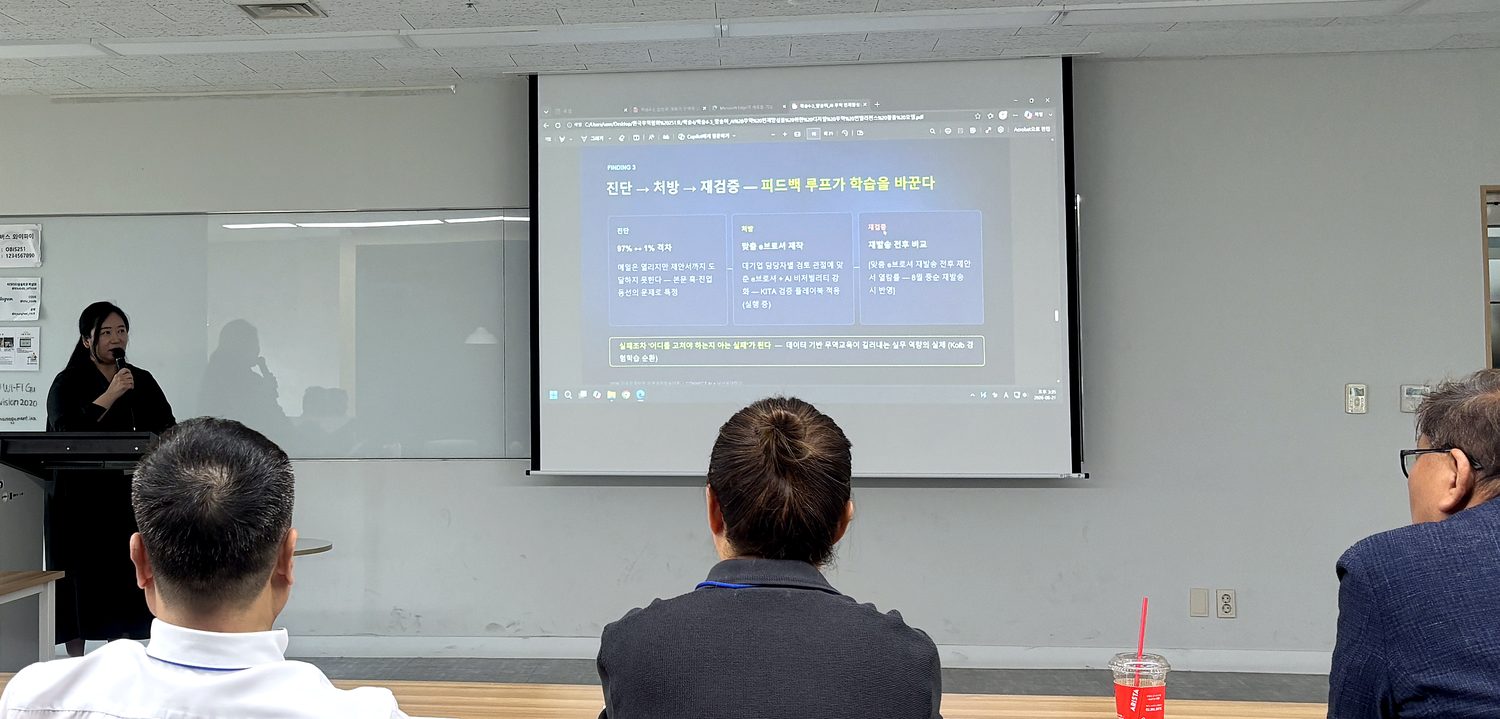
The longest passage in the talk was not about success but about a blockage. The point where mail was opened but the proposal was never reached was identified in the data; the cause was narrowed to the body hook and the entry path, and treated with a tailored e-brochure. The before-and-after comparison was still under way at the time of the talk. The study organised this diagnose → treat → re-verify loop into a 15-week practicum model — design (W1–4), field (W5–8), experiment (W9–12), conversion (W13–15).
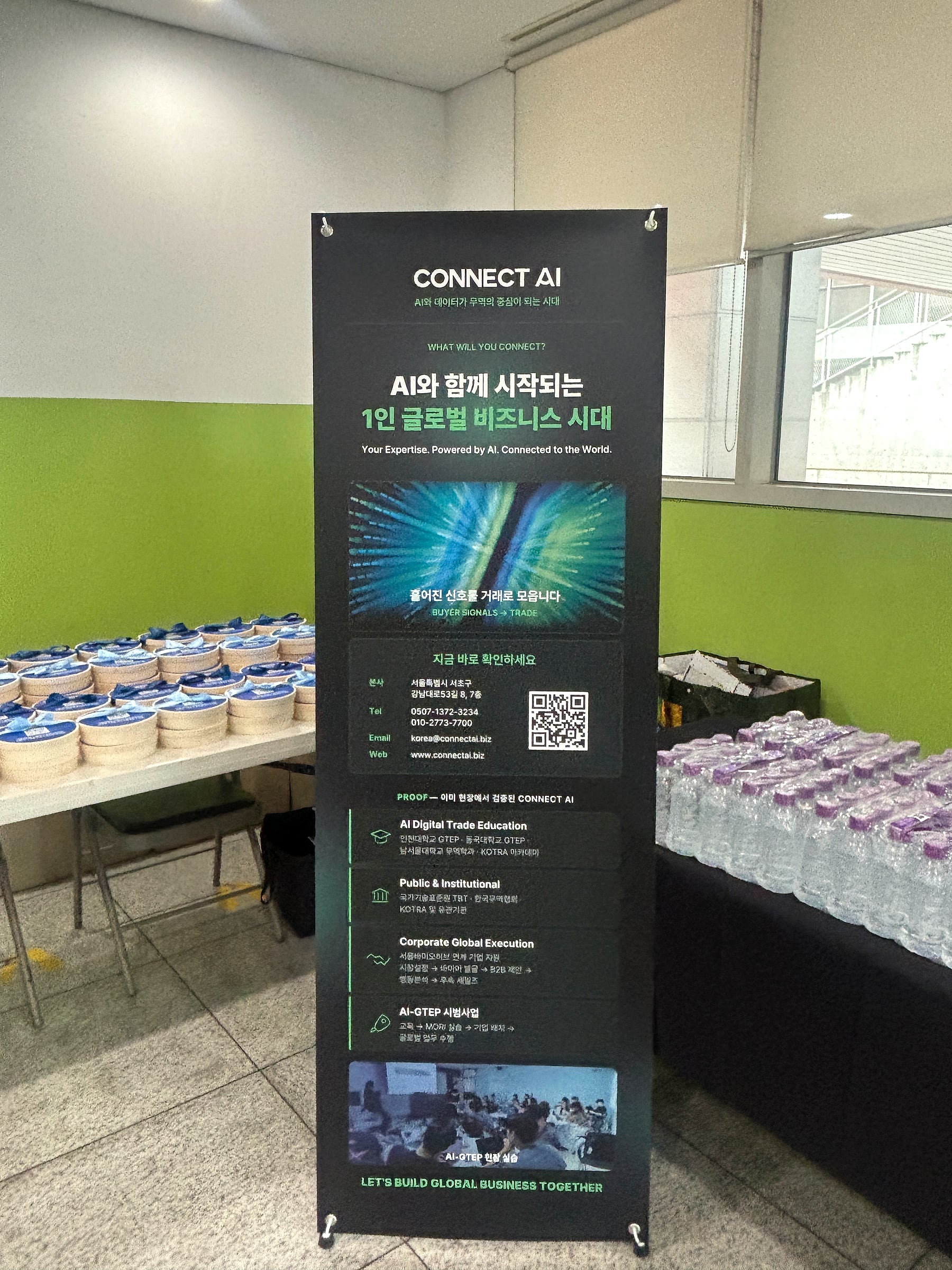
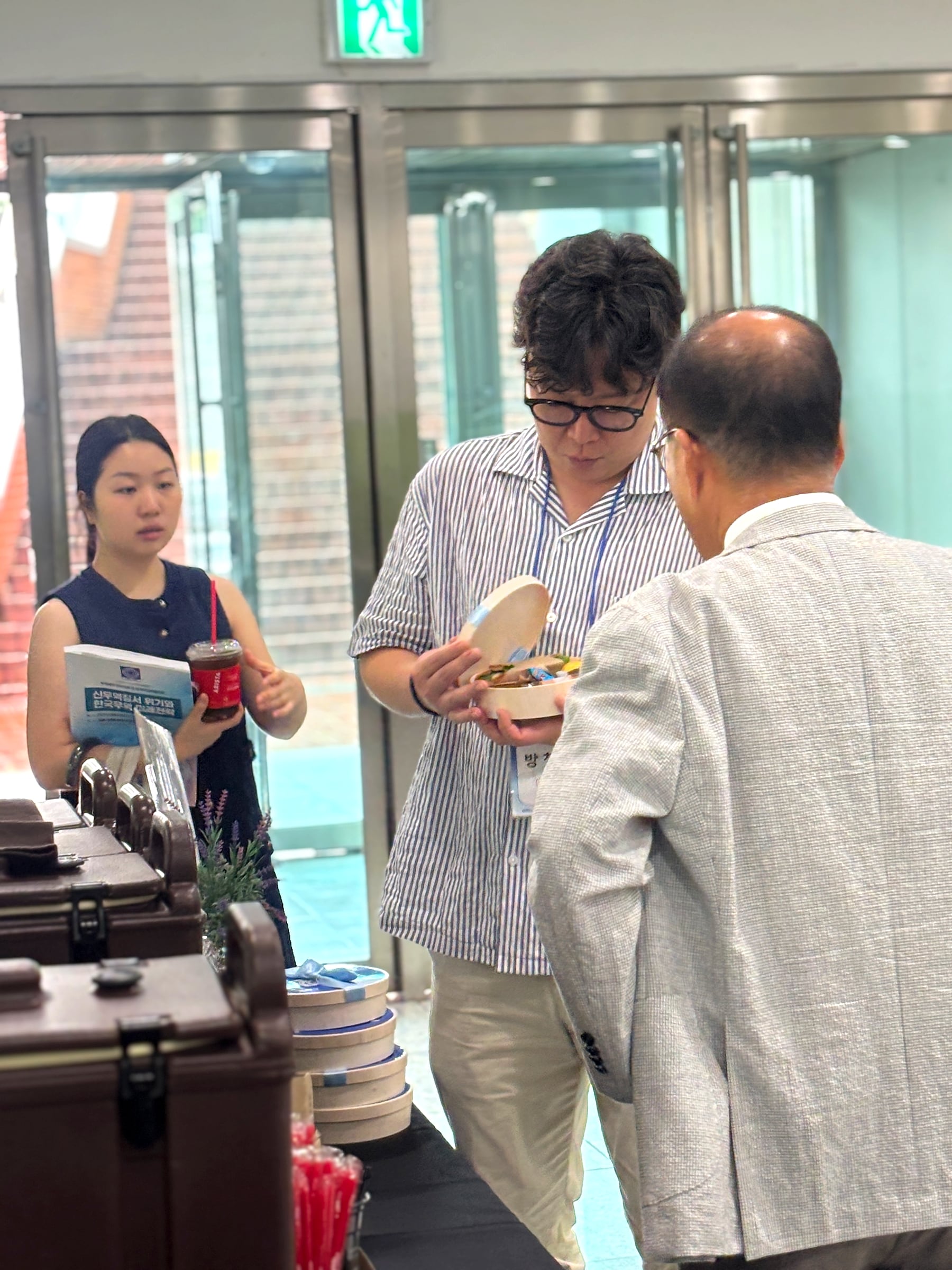
The talk also stated its own limits. It is a descriptive comparison of two campaigns of different kinds, not a statistical generalisation. Email opens carry measurement error and were treated only as a reference indicator. The observation window was short, so contracts and export outcomes were not tracked. It also disclosed that the data was collected on the platform of the company where a co-author works, and that the corresponding author verified the outputs. One more disclosure: CONNECT AI is one of the conference’s sponsors — we sponsored the attendees’ meals. Sponsorship and the call for papers are separate processes run by the association, but the fact that we presented our own case at an event we sponsored is something a reader should know.
On the day
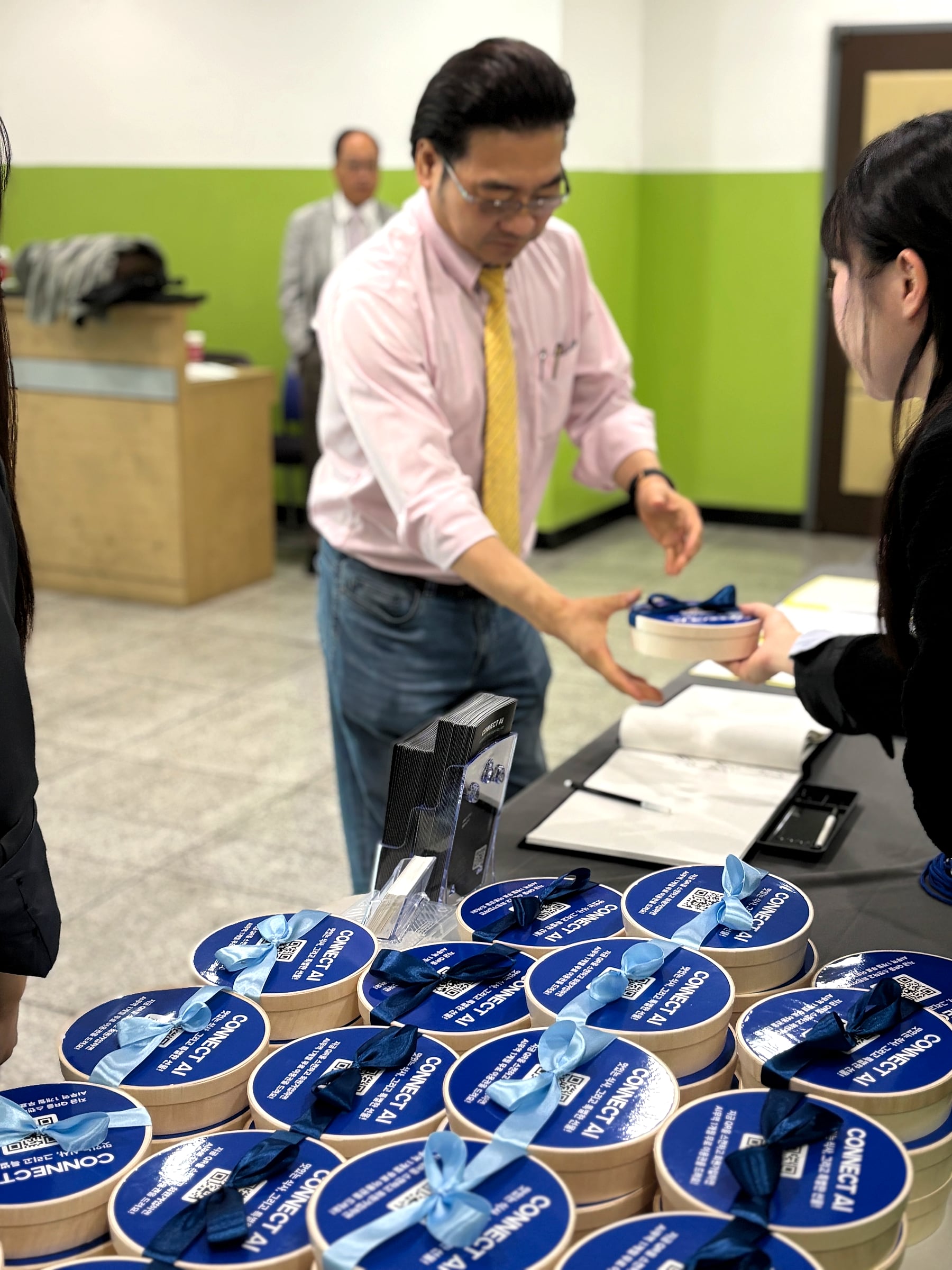
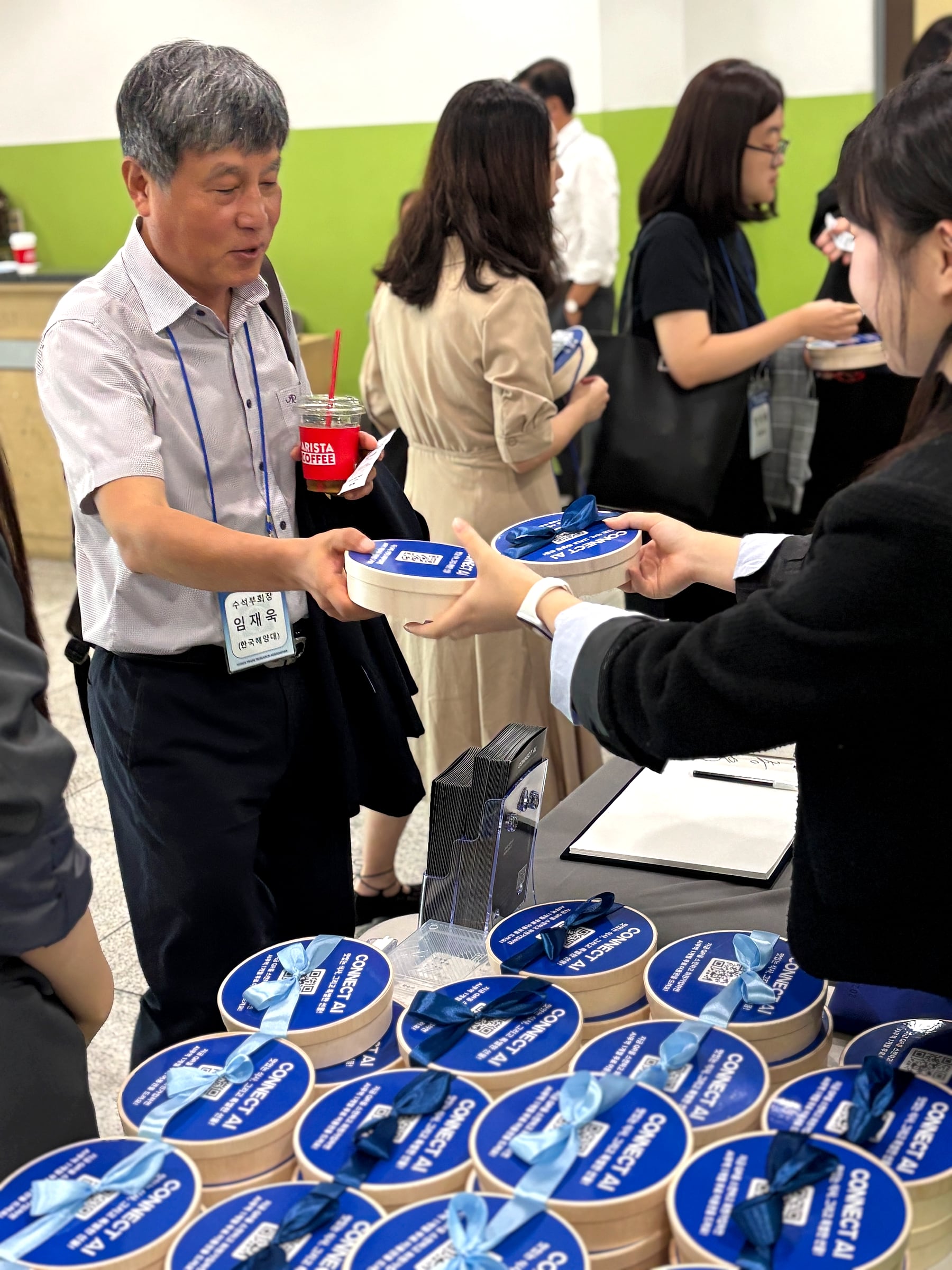
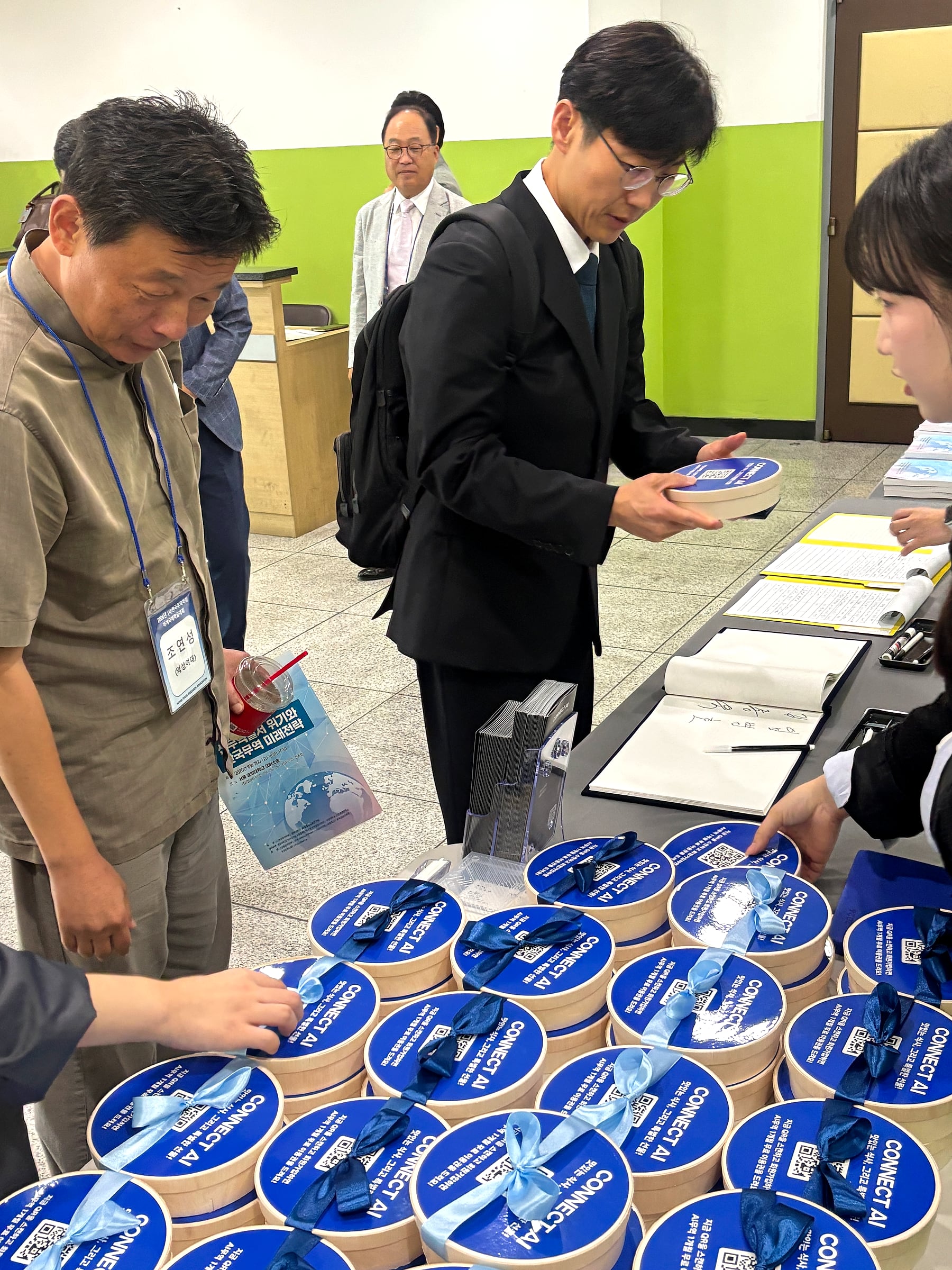
Where did this talk take place?
It was a session talk at the Korea Trade Research Association’s 「2026년 (사)한국무역학회 무역학자 전국대회 및 하계국제학술대회」, held on Friday, August 21, 2026 at Ohbis Hall, Kyung Hee University Seoul Campus. The conference theme was “Crisis in the new trade order and Korea’s future trade strategy,” and CONNECT AI presented from 15:00 to 15:30 in Session II.
What did the talk cover?
How to measure the performance of trade practicums and export-support programs. Consultation counts and contract values are all outcome indicators, so what a buyer opened, where they lingered and whether they came back — everything between sending and signing — is recorded nowhere. The talk examined whether that gap can be reconstructed from digital behavior logs, using two campaigns as cases.
What does “digital behavior log” refer to?
Sends, clicks, effective sessions, revisits and follow-up action choices. The talk first set the principle that these logs are read only as leading indicators of process — never as final export performance — and limited email opens to a reference indicator, since they are affected by security bots, image proxies and mail privacy features.
What is this article based on?
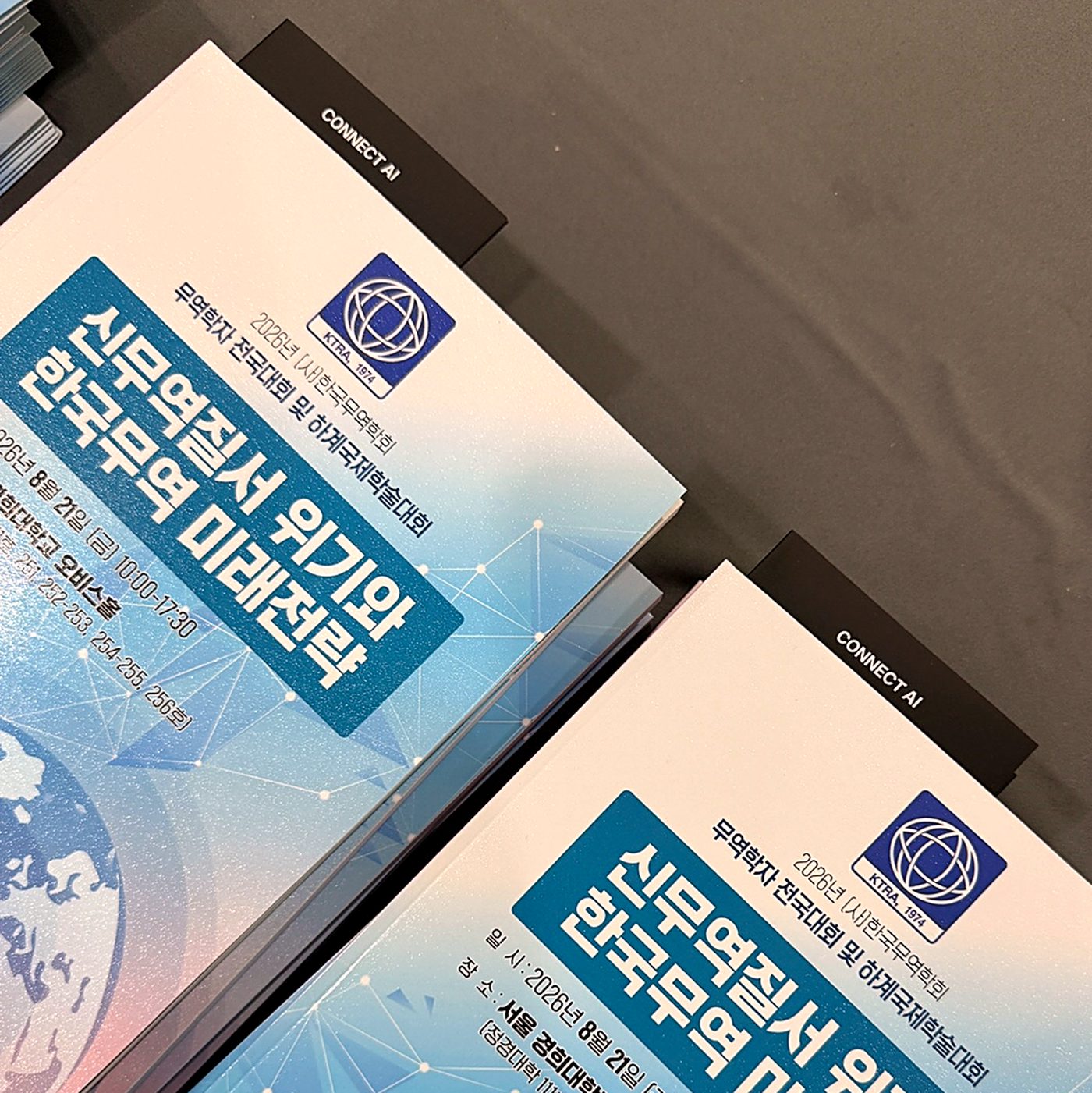
The conference leaflet (the printed programme) and the presentation deck. This was an oral session talk at an academic conference — not a journal publication, an award or a selection. The figures come from the deck as published, and buyer and company names and campaign names were withheld under the study’s research-ethics rules.
From education to exporter projects and income as AI trade intelligence professionals
Education → Selection of outstanding graduates → Placement with exporters → AI trade intelligence work → Professional income
CONNECT AI connects AI trade technology, professional development and execution for exporters. It selects outstanding graduates for placement with export businesses, where they earn income as AI trade intelligence professionals by performing market and buyer analysis, tailored proposals, response analysis and sales follow-up with MORI.
The LALA PINK projects by Incheon National University GTEP alumni Jung Han-young and Kim Hyun-a show the work participants perform in an exporter’s business after education.
Jung Han-young · AI visibility field project →
Organized the English website, FAQs, content and inquiry routes into a digital export foundation that helps buyers discover and assess the company.
Kim Hyun-a · Global sales field project →
Performed market and buyer analysis, tailored proposals and outreach, response recording and sales follow-up.
A behavior log is not a certificate that proves talent — it is a map that shows where to fix things.